

20 Nov Tattoo Pain Chart Explained – How Pain Varies Across Your Body
Getting a tattoo is an exciting experience — a mix of anticipation, adrenaline, and, yes, a bit of pain. But how much it hurts depends on where you get inked, your pain tolerance, and even how your body reacts on the day. The tattoo pain chart gives a general guide to what you can expect, helping you prepare before sitting in the chair.
At Good Marks Tattoo, we’ve seen thousands of clients come through our Melbourne CBD studio — everyone from first-timers to full-sleeve veterans — and one thing’s certain: no two tattoo sessions feel exactly the same. Still, understanding how pain varies across the body can help you choose a placement that suits your comfort level.
Understanding Tattoo Pain
Tattooing involves repeatedly puncturing the skin with a needle to deposit ink into the dermis. Areas with more nerve endings, thinner skin, or less muscle or fat tend to feel more sensitive. On the other hand, parts of the body with thicker skin and natural padding often handle tattooing better.
It’s worth noting that everyone’s pain threshold is different – some clients breeze through rib tattoos, while others find a small wrist tattoo challenging. A good artist will always check in with you, keep you comfortable, and make sure the experience stays manageable.
The Most and Least Painful Areas
When you look at a tattoo pain chart, you’ll notice that certain zones consistently rate higher on the discomfort scale.
Most painful tattoo spots:
- Ribs and sternum: Thin skin and close proximity to bone make this one of the toughest spots.
- Armpits and inner arms: Packed with nerve endings and prone to sensitivity.
- Spine and lower back: The vibration from the needle against bone can feel intense.
- Feet, ankles, and knees: Minimal cushioning makes these areas sting.
- Head and face: A combination of thin skin, vibration, and nerve endings adds up to high sensitivity.
Less painful tattoo areas:
- Upper arms and thighs: More muscle and fat cushion the sensation.
- Calves: Generally considered one of the easier areas to sit through.
- Outer shoulders and forearms: Great options for first-time tattoos.
So, while the most painful tattoo spot will differ from person to person, areas near bone or thin skin are usually the ones people remember most.
The Tattoo Pain Chart – Male vs Female
Many people ask whether pain differs between men and women. While there’s no definitive answer, research and client feedback show some interesting trends reflected in both the male and female tattoo pain chart versions.
For women, spots like the ribs, chest, and inner thighs are often reported as particularly sensitive. Hormonal cycles can also influence pain perception — for instance, tattoos might feel more uncomfortable during certain stages of the menstrual cycle.
For men, pain tends to be most noticeable around the ribs, spine, and shins — again, areas where skin meets bone. Muscle density can sometimes help diffuse sensation, meaning spots like the upper arm or shoulder may feel less intense.
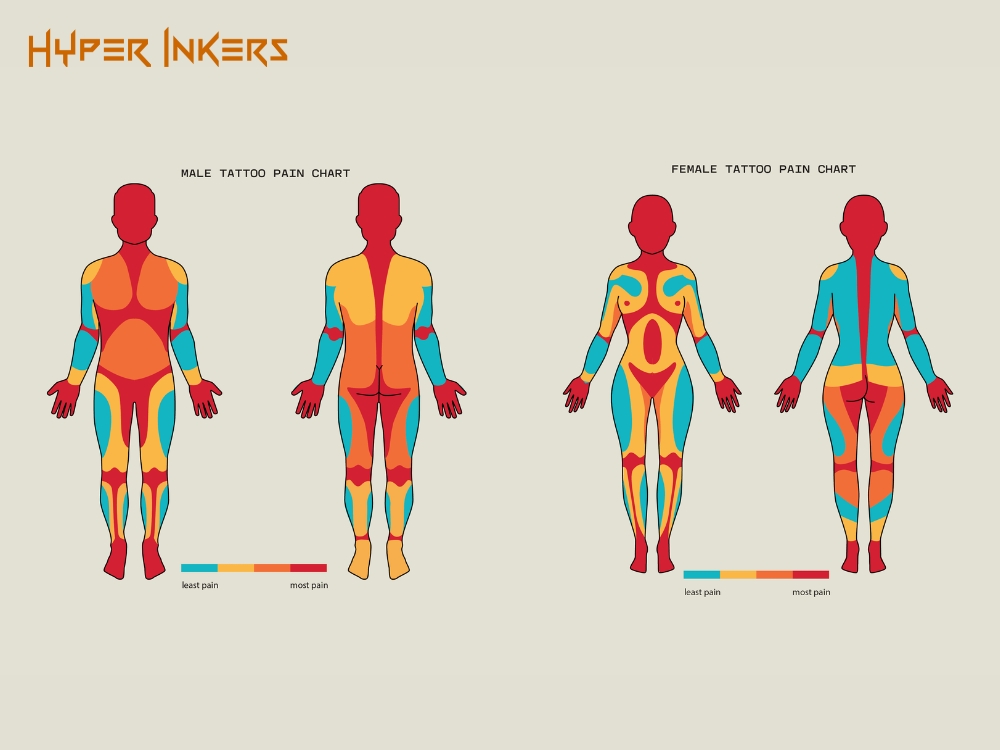
Ultimately, the differences are subtle. What matters more is hydration, sleep, and overall mental state on the day – a calm, rested client nearly always sits better than a tired or stressed one.
How to Prepare for a Pain-Free Session (Well, Almost)
You can’t eliminate tattoo pain entirely, but you can make the experience much smoother:
- Rest up: A good night’s sleep helps your body cope better.
- Eat beforehand: Don’t arrive on an empty stomach; steady blood sugar keeps you feeling stable.
- Stay hydrated: Your skin and body will thank you.
- Avoid alcohol or blood thinners: These can increase bleeding and prolong the session.
- Communicate with your artist: If something doesn’t feel right, let them know — a good artist will adjust their approach.
Remember, pain is temporary, but your tattoo will last for years to come.
What the Pros Know
Experienced tattoo artists are well aware of how different body parts respond – they’ll guide you on placement based on your design, comfort, and long-term appearance. For example, a fine line tattoo might look amazing on a forearm but fade more quickly on hands or feet due to constant friction and exposure.
Japanese tattoos tend to incorporate a lot of detail, colour and thicker outlines, which can mean a longer, slightly more painful appointment. Here’s a helpful breakdown of design ideas, pain levels and quicker healing tips for behind the ear tattoos specifically.
At Good Marks Tattoo, our team takes pride in helping clients make informed choices — whether it’s your first tattoo or your fiftieth. We understand that a positive experience starts with trust and ends with a piece of art you’ll love for life.
The Good Marks Approach
Every tattoo has a story, and we’re here to make sure the process behind it feels just as meaningful. Our artists combine technical skill with a genuine respect for each client’s individuality. Whether you’re curious about the tattoo pain chart, planning your next piece, or exploring new placements, we’re here to guide you through every step.
With years of experience across styles — from fine line to traditional, Japanese, and beyond — our Melbourne CBD studio is a space where good art meets good energy.
Ready to get inked?
If you’re thinking about your next tattoo and want to talk placement, design, or comfort, drop by Good Marks Tattoo in the Melbourne CBD. Walk-ins are welcome daily from 11am to 6pm (except Sundays, which are by appointment only), or book ahead to lock in your session with one of our talented artists.